
Birləşmiş Krallıq: yük maşınlarının hərəkətinə ölkə miqyaslı qadağa yoxdur. Yerli və marşrut məhdudiyyətləri yenə də tətbiq oluna bilər, aşağıya baxın.
Böyük Britaniyada yük maşınlarının hərəkətinə dair ölkə miqyasında bazar günü və ya dövlət bayramı qadağası yoxdur. Ağır yük avtomobilləri, o cümlədən bank bayramları da daxil olmaqla, həftənin istənilən günü ümumi təqvim məhdudiyyəti olmadan hərəkət edə bilər. Daşıyıcılar üçün əhəmiyyət kəsb edən məhdudiyyətlər milli və vaxta bağlı deyil, yerli və daimidir: Londonda 12 t-dan ağır yük maşınları üçün Birbaşa Görünüş Standartı (Direct Vision Standard) çərçivəsində HGV Təhlükəsizlik İcazəsi (HGV Safety Permit) tələb olunur, London Aşağı Emissiya Zonası (Low Emission Zone) tələblərə uyğun olmayan ağır avtomobillərdən haqq alır, London Yük Maşınları Nəzarət Sxemi (London Lorry Control Scheme) isə 18 t-dan ağır yük maşınlarını bir çox yolda gecə və həftə sonu məhdudlaşdırır. Sürücülərin iş vaxtı və taxoqraf qaydaları bütün ölkə üzrə tətbiq olunur.
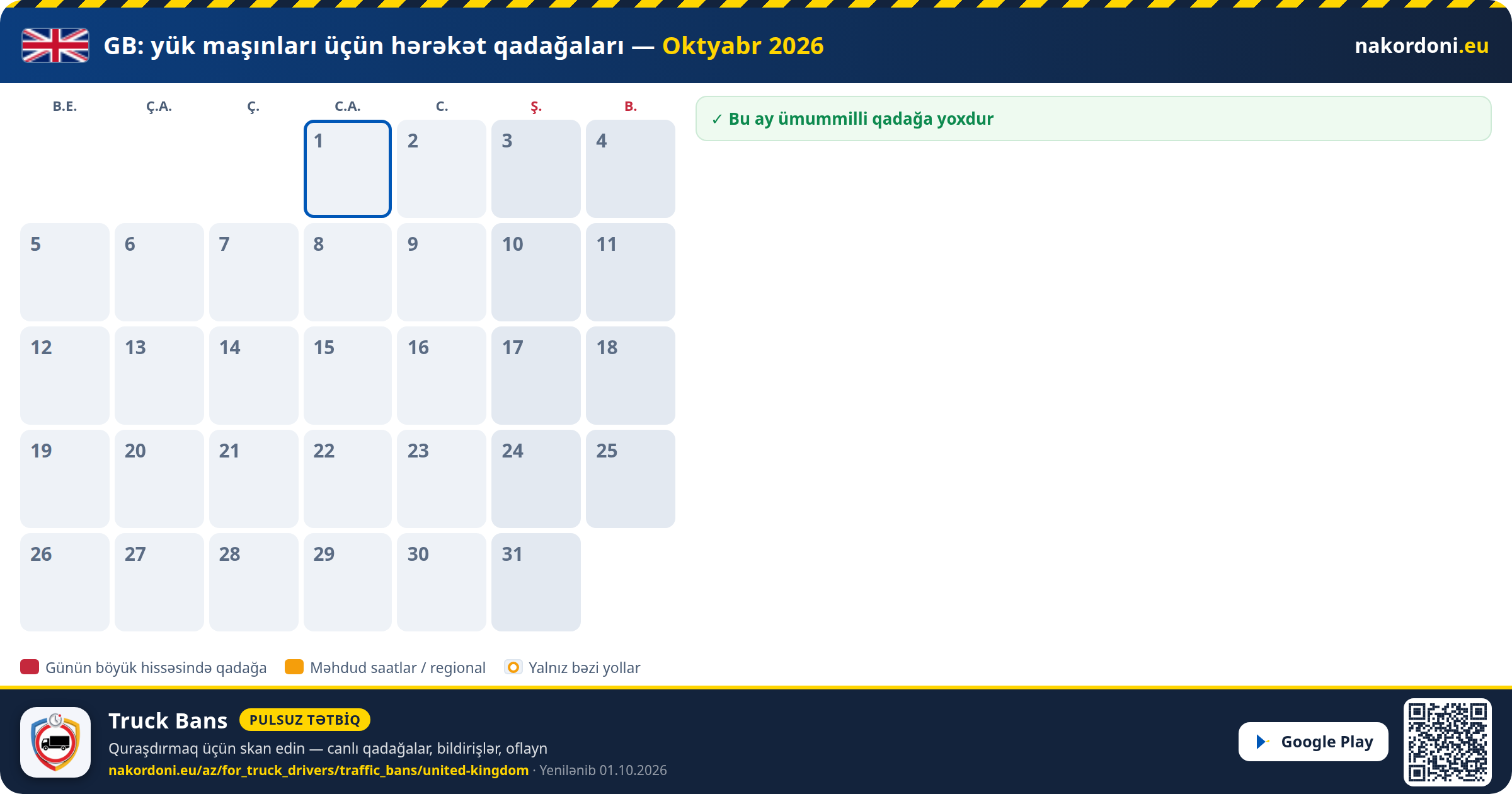
Növbəti 30 gün
Birləşmiş Krallıq: planlaşdırılmış ölkə miqyaslı hərəkət qadağaları yoxdur. Yerli və şəhər məhdudiyyətləri aşağıda təsvir olunub.
Yük maşınları qadağaları olan dövlət bayramları — Birləşmiş Krallıq 2026
| Tarix | Bayram | Qadağa vaxtı | Əhatə |
|---|---|---|---|
| Yeni il günü | Ümumi qadağa tətbiq olunmur | ||
| Böyük Cümə | Ümumi qadağa tətbiq olunmur | ||
| Pasxa bazar ertəsi | Ümumi qadağa tətbiq olunmur | ||
| May ayının ilk bank bayramı | Ümumi qadağa tətbiq olunmur | ||
| Yaz bank bayramı | Ümumi qadağa tətbiq olunmur | ||
| Yay bank bayramı | Ümumi qadağa tətbiq olunmur | ||
| Milad günü | Ümumi qadağa tətbiq olunmur | ||
| Boxing Day (əvəzləyici gün) | Ümumi qadağa tətbiq olunmur |
London Birbaşa Görünüş Standartı və HGV Təhlükəsizlik İcazəsi
12 t-dan artıq ümumi çəkiyə malik hər yük maşınına Böyük Londona daxil olmaq və ya orada işləmək üçün HGV Təhlükəsizlik İcazəsi (HGV Safety Permit) lazımdır; bu ərazi bütün London borolarını və London Şəhərini (City of London) əhatə edir. Sxem hər gün, gün ərzində 24 saat işləyir. O, sürücünün kabin pəncərələrindən nə qədər birbaşa görə bildiyini sıfırdan beş ulduza qədər şkalada qiymətləndirir. 28 oktyabr 2024-cü ildən minimum tələb üç ulduza qalxdı; bu reytinqdən aşağı avtomobillər Mütərəqqi Təhlükəsiz Sistem (Progressive Safe System) şərtlərinə cavab verərsə yenə də icazə ala bilər, bu şərtlər kameralar, sensorlar, xəbərdarlıq siqnalları və yan altdan keçmə mühafizəsi əlavə edir. Etibarlı icazə olmadan işləmək £550 məbləğində cərimə bildirişinə səbəb ola bilər, 14 gün ərzində ödənilərsə yarıya endirilir.
Ağır avtomobillər üçün London Aşağı Emissiya Zonası
Aşağı Emissiya Zonası (Low Emission Zone, LEZ) ən çox çirkləndirici ağır dizel avtomobilləri hədəf alır. 3,5 t-dan ağır yük maşınları, avtobuslar və turist avtobusları azot oksidləri və bərk hissəciklər üzrə Euro VI standartına cavab verməli, ya da gündəlik haqq ödəməlidir. Tələblərə uyğun olmayan HGV, əgər hələ də köhnə Euro IV bərk hissəcik standartına cavab verirsə, gündə £100, əks halda gündə £300 ödəyir. LEZ Böyük Londonun böyük hissəsini əhatə edir və ilin hər günü, gün ərzində 24 saat işləyir. Ultra Aşağı Emissiya Zonası (Ultra Low Emission Zone, ULEZ) ayrı bir sxemdir və HGV-lərə deyil, 3,5 t-a qədər avtomobillərə, motosikletlərə və furqonlara şamil olunur, buna görə yük maşınları üçün aktual emissiya sxemi məhz LEZ-dir.
London Yük Maşınları Nəzarət Sxemi
London Councils tərəfindən idarə olunan London Yük Maşınları Nəzarət Sxemi (London Lorry Control Scheme) yaşayış rayonlarında gecə səs-küyünü azaltmaq üçün maksimum ümumi çəkisi 18 t-dan artıq olan yük maşınlarını məhdudlaşdırır. Məhdud yollardan icazəsiz istifadə etmək olmaz: bazar ertəsindən cüməyə qədər gecələr 21:00-dan 07:00-a qədər və şənbə 13:00-dan bazar ertəsi 07:00-a qədər fasiləsiz. Eyni məhdudiyyətlər dövlət və bank bayramlarında da tətbiq olunur. Magistral yolların əsas şəbəkəsi olan Excluded Route Network ağır yük maşınları üçün icazəsiz hər zaman açıq qalır. Nəzarət saatlarında məhdud yollardan istifadə icazəsi pulsuzdur, lakin hər avtomobil üçün alınmalıdır və onsuz məhdud yolda hərəkət cərimə bildirişinə səbəb ola bilər.
Sürücülərin iş vaxtı və taxoqraf qaydaları
Böyük Britaniya HGV işlərinin əksəriyyəti üçün Aİ qaydalarından qaynaqlanan və indi assimilyasiya olunmuş qaydalar adlanan sürücü iş vaxtı hədlərini saxlayır. Gündəlik sürmə 9 saatla məhdudlaşır, bu, həftədə iki dəfədən çox olmamaq şərti ilə 10 saata qədər uzadıla bilər. Həftəlik sürmə 56 saatı, ardıcıl istənilən iki həftə üzrə sürmə isə 90 saatı keçə bilməz. 4 saat 30 dəqiqə sürmədən sonra ən azı 45 dəqiqəlik fasilə tələb olunur. Taxoqraf sürücünün fəaliyyətini qeyd etməlidir. Bu hədlər hər hansı yerli giriş sxemindən asılı olmayaraq bütün Böyük Britaniya üzrə tətbiq olunur.
Operation Brock və Kentdə yük hərəkətinin idarə edilməsi
La-Manş limanlarına gedən marşrutlarda hərəkət qadağası yoxdur, lakin Kent üzərindən yük axını keçid zamanı yaranan fasilələr dövründə fəal şəkildə idarə olunur. Operation Brock M20 yolunda əks istiqamətli hərəkət sxemidir və gecə ərzində qurula bilər ki, Dover limanında (Port of Dover) və ya Eurotunnel-də növbələr azalana qədər limana yönələn yük maşınlarını sahilə doğru gedən hissədə 8 və 9 nömrəli qovşaqlar arasında saxlasın. Operation Brock qüvvədə olduqda Dover və ya Eurotunnel istiqamətinə gedən HGV-lər yalnız işarələnmiş marşrutlarla hərəkət etməlidir; işarələnmiş marşrutdan çıxan sürücülər geri qaytarıla bilər və £300 cərimə riski daşıyır. Sistemin hər mərhələsinin nə vaxt aktivləşdirilməsinə Kent Polisi (Kent Police) qərar verir.
Tez-tez verilən suallar
Böyük Britaniyada yük maşınlarının bazar günləri hərəkəti qadağandırmı?
Xeyr. Böyük Britaniyada ağır yük avtomobilləri üçün ölkə miqyasında bazar günü hərəkət qadağası yoxdur. Yük maşınları ölkə boyu bazar günləri hərəkət edə bilər, yalnız London Yük Maşınları Nəzarət Sxemi kimi yerli sxemlərə və sürücülərin iş vaxtı qaydalarına tabe olmaqla.
Bank bayramları Böyük Britaniyada yük hərəkətini dayandırırmı?
Xeyr. Milli səviyyədə dövlət bayramı hərəkət qadağası yoxdur. Yük daşımaları 2026-cı ilin bütün bank bayramlarında hərəkət edə bilər. London Yük Maşınları Nəzarət Sxemi bank bayramlarında da öz gecə və həftə sonu məhdudiyyətlərini saxlayır, lakin bu, milli qadağa deyil, London üçün yerli sxemdir.
Londona HGV ilə girmək üçün icazə lazımdırmı?
Bəli. 12 t-dan artıq ümumi çəkiyə malik yük maşınına Böyük Londonun istənilən yerinə istənilən vaxt daxil olmaq və ya orada işləmək üçün Transport for London-un Birbaşa Görünüş Standartı (Direct Vision Standard) çərçivəsində HGV Təhlükəsizlik İcazəsi (HGV Safety Permit) lazımdır. 28 oktyabr 2024-cü ildən avtomobil ən azı üç ulduzlu birbaşa görünüş reytinqinə malik olmalı və ya Mütərəqqi Təhlükəsiz Sistem (Progressive Safe System) şərtlərinə cavab verməlidir. İcazəsiz hərəkət £550 məbləğində cərimə bildirişinə səbəb ola bilər.
Londonun emissiya zonası yük maşınlarına şamil olunurmu?
Bəli, Aşağı Emissiya Zonası (Low Emission Zone, LEZ) vasitəsilə. Euro VI standartına cavab verməyən 3,5 t-dan ağır yük maşınları gündəlik £100 LEZ haqqı ödəyir, ən çox çirkləndirici avtomobillər üçün isə bu məbləğ £300-a qalxır. LEZ Böyük Londonun böyük hissəsini əhatə edir və hər gün, gün ərzində 24 saat işləyir. Ayrıca Ultra Aşağı Emissiya Zonası (Ultra Low Emission Zone) HGV-lərə deyil, 3,5 t-a qədər olan yüngül avtomobillərə şamil olunur.
London Yük Maşınları Nəzarət Sxemi nədir?
Bu, London Councils tərəfindən idarə olunan səs-küy nəzarəti sxemidir və maksimum ümumi çəkisi 18 t-dan artıq olan yük maşınlarını məhdud yollar şəbəkəsində məhdudlaşdırır. O, iş günü gecələri 21:00-dan 07:00-a qədər və şənbə 13:00-dan bazar ertəsi 07:00-a qədər fasiləsiz işləyir, həmçinin dövlət və bank bayramlarında da tətbiq olunur. Sürücülərə həmin saatlarda məhdud yollardan istifadə etmək üçün hər avtomobilə pulsuz icazə lazımdır, əks halda onlar cərimə bildirişi ilə üzləşə bilər.
Dover və ya La-Manş tunelində nəzərə almalı olduğum gecikmələr varmı?
La-Manş üzərindən keçidlərdə fasilələr zamanı National Highways və Kent Polisi (Kent Police) Operation Brock-u tətbiq edir, bu, M20 yolunda əks istiqamətli hərəkət sxemidir və limana yönələn yük maşınlarını 8 və 9 nömrəli qovşaqlar arasında saxlayır. O qüvvədə olduqda Dover limanına (Port of Dover) və ya Eurotunnel-ə gedən HGV-lər yalnız işarələnmiş marşrutlarla hərəkət etməlidir. Sərhəddə canlı gözləmə vaxtları bu saytın digər bölmələrində əhatə olunur.
Böyük Britaniyada yük maşınlarına hansı əsas yol qaydaları şamil olunur?
Böyük Britaniyada hərəkət soldandır və sürət saatda kilometrlə deyil, saatda millə ölçülür. İngiltərə və Uelsdə 7,5 t-dan ağır yük avtomobili tək zolaqlı yollarda 50 mph (80 km/h), ikiqat yollarda 60 mph (96 km/h) və avtomagistrallarda 60 mph (96 km/h) ilə məhdudlaşır; Şotlandiyada tək zolaqlı yolda hədd daha aşağıdır, 40 mph (64 km/h), ikiqat yolda isə 50 mph (80 km/h) təşkil edir. Sürücülərin iş vaxtı və taxoqraf qaydaları bütün ölkə üzrə tətbiq olunur.
Rəsmi mənbə
- GOV.UK - Böyük Britaniyanın bank bayramları
- Transport for London - Direct Vision Standard və HGV Safety Permit
- Transport for London - Aşağı Emissiya Zonası (LEZ)
- London Councils - London Lorry Control Scheme
- GOV.UK - sürücülərin iş vaxtı: assimilyasiya olunmuş (saxlanılan Aİ) qaydaları
- GOV.UK - sürət hədləri
- National Highways - Operation Brock
- GOV.UK - Kentdə M20 yolunda Dover və Eurotunnel istiqamətində hərəkətin idarə edilməsi
Qaydalar qısa müddətdə dəyişə bilər. Yola çıxmazdan əvvəl yuxarıdakı rəsmi mənbələri yoxlayın.